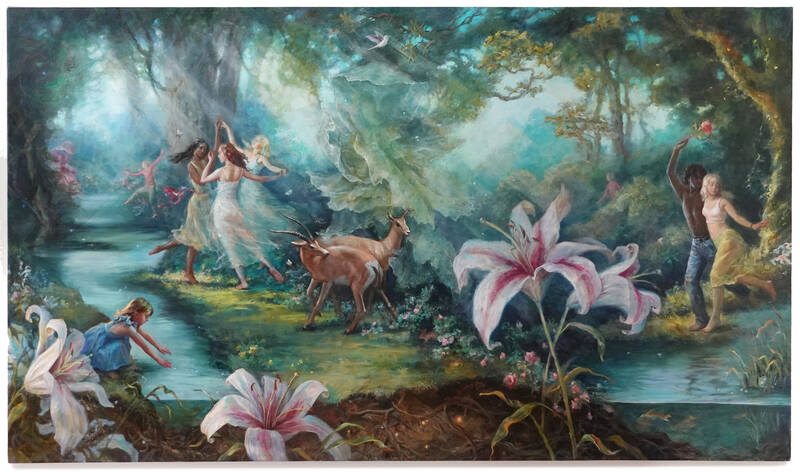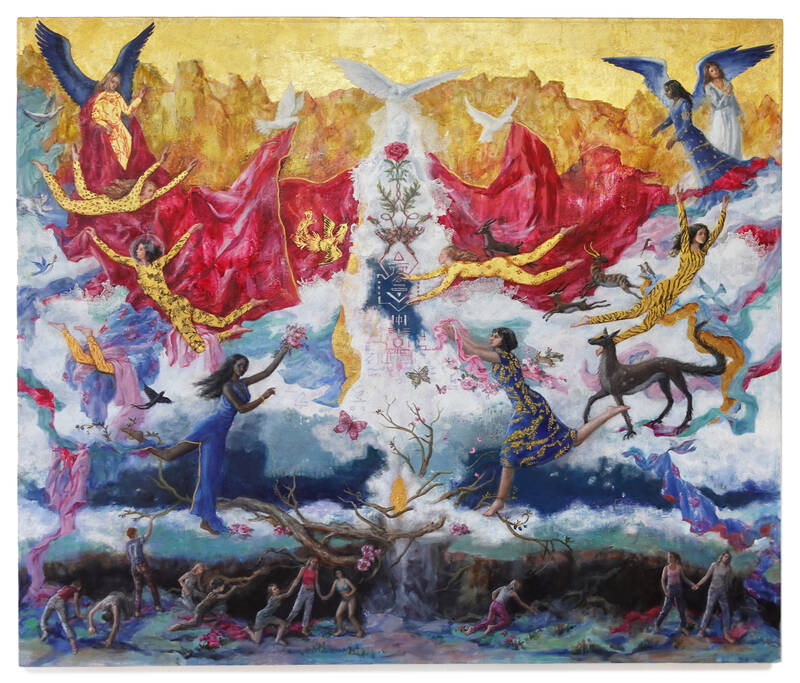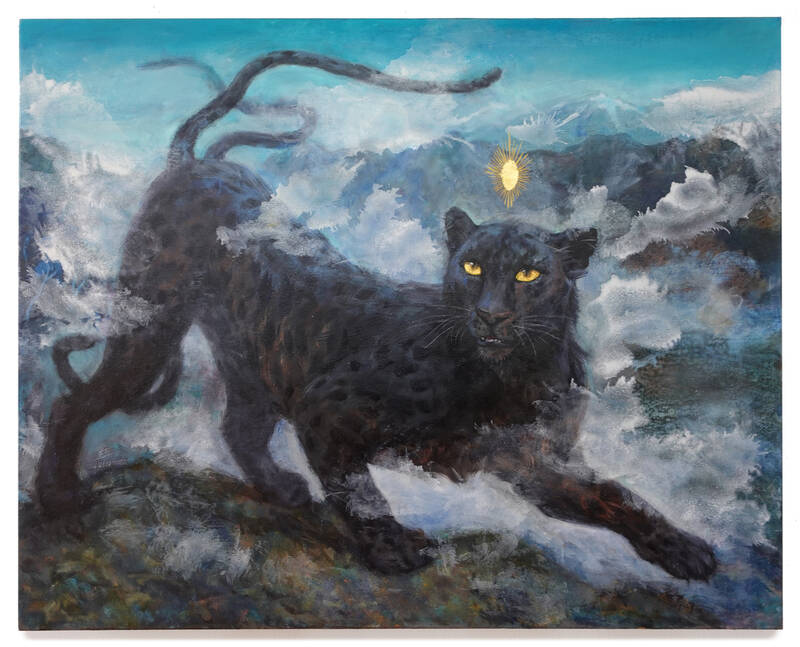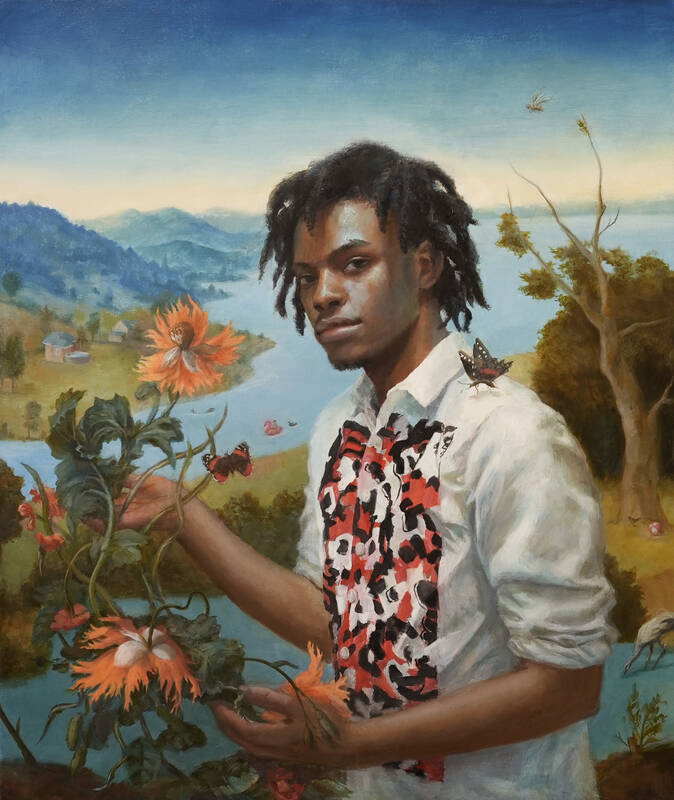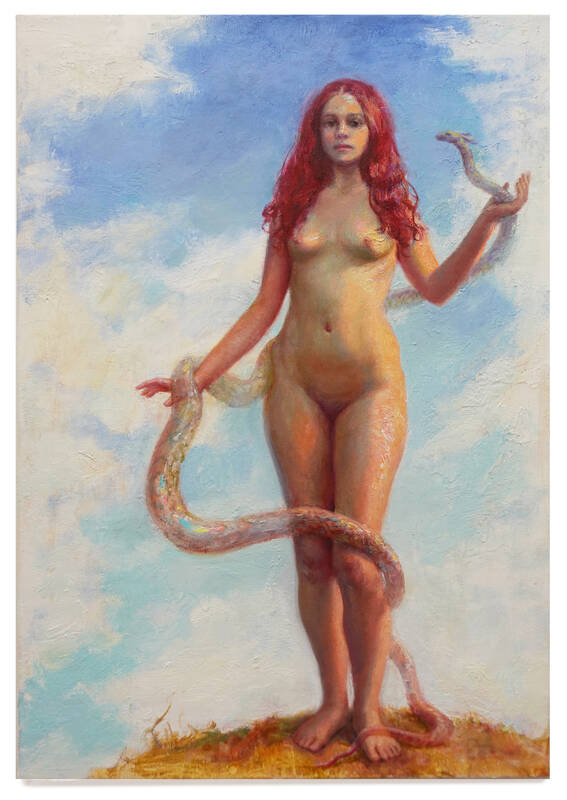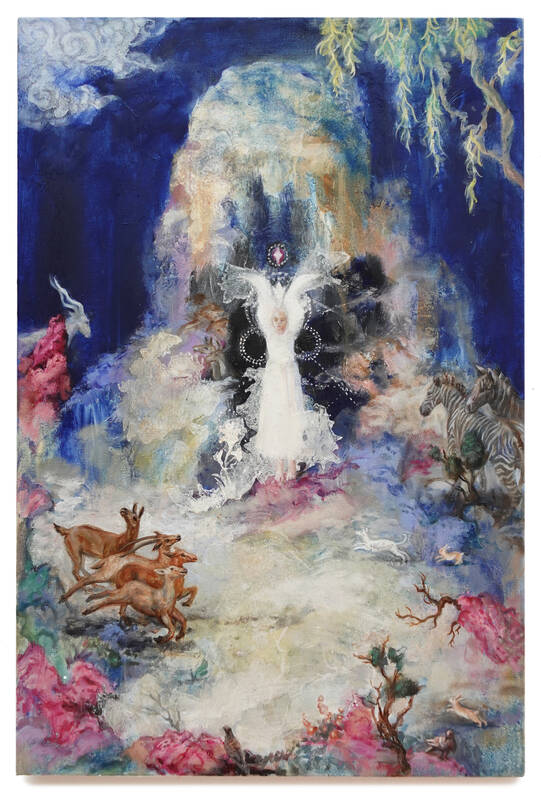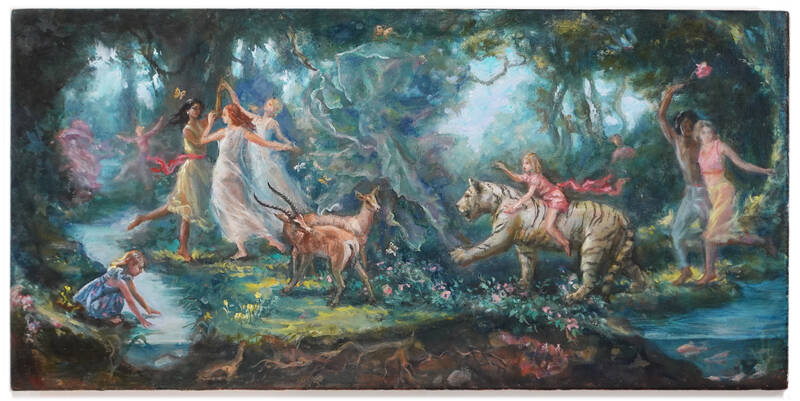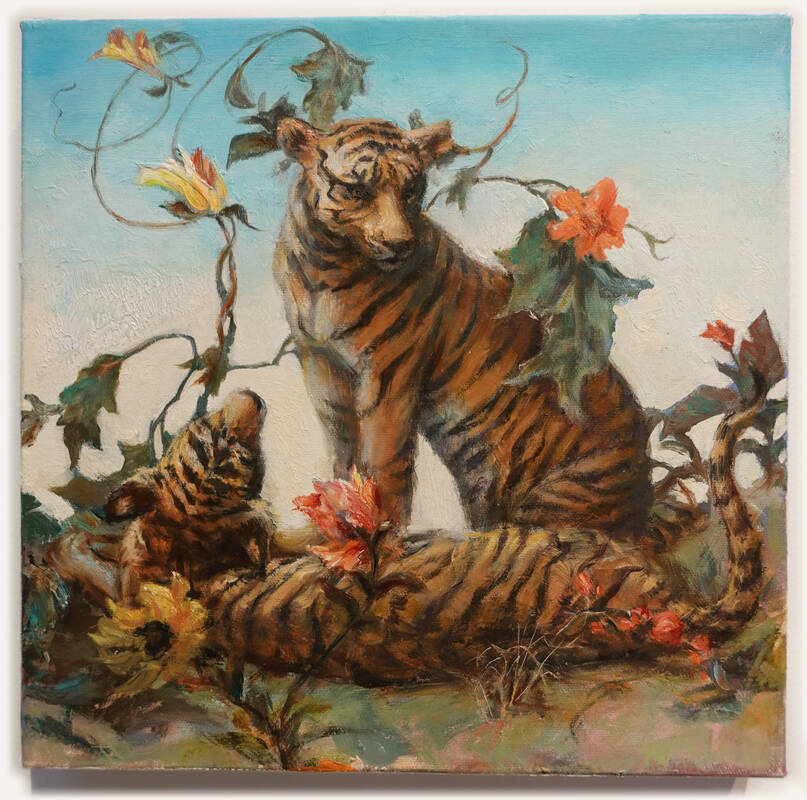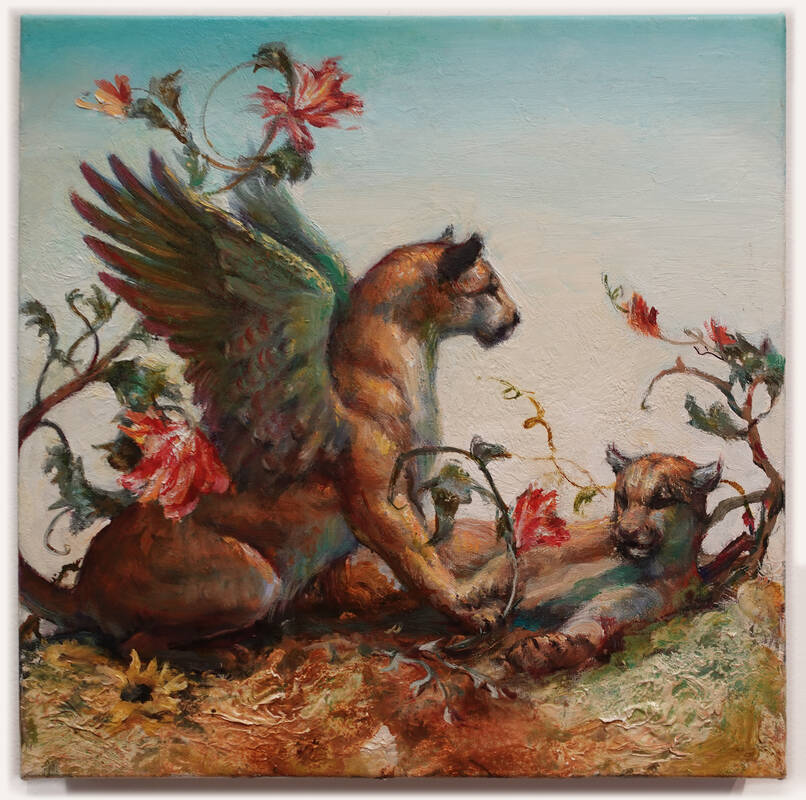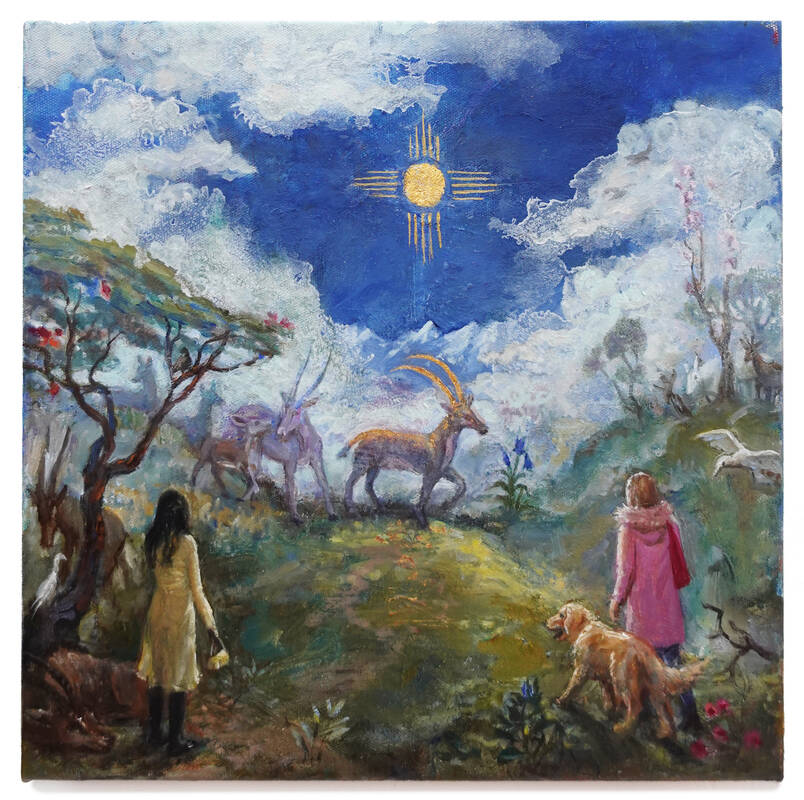
The Grenning Gallery is pleased to present Primavera, an exhibition of new work by Canadian-born, New York–based painter Kristy Gordon, accentuated by the colorful whimsy of world-renowned artist, Hunt Slonem. On view from April 4 through April 28, 2026, the exhibition is anchored by its namesake oil painting measuring 50 by 87 inches and brings together a suite of new paintings that mark a lyrical evolution in Gordon's ongoing exploration of myth, transformation, and the sacred feminine. Join us for the Opening Reception on Saturday, April 4th, 5:30-7:00pm, where Kristy Gordon be present.
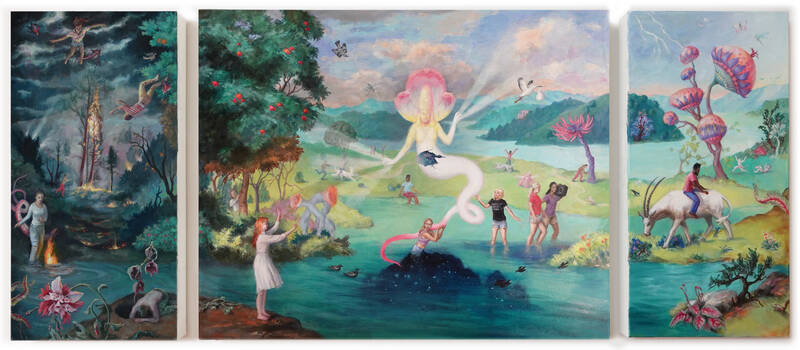
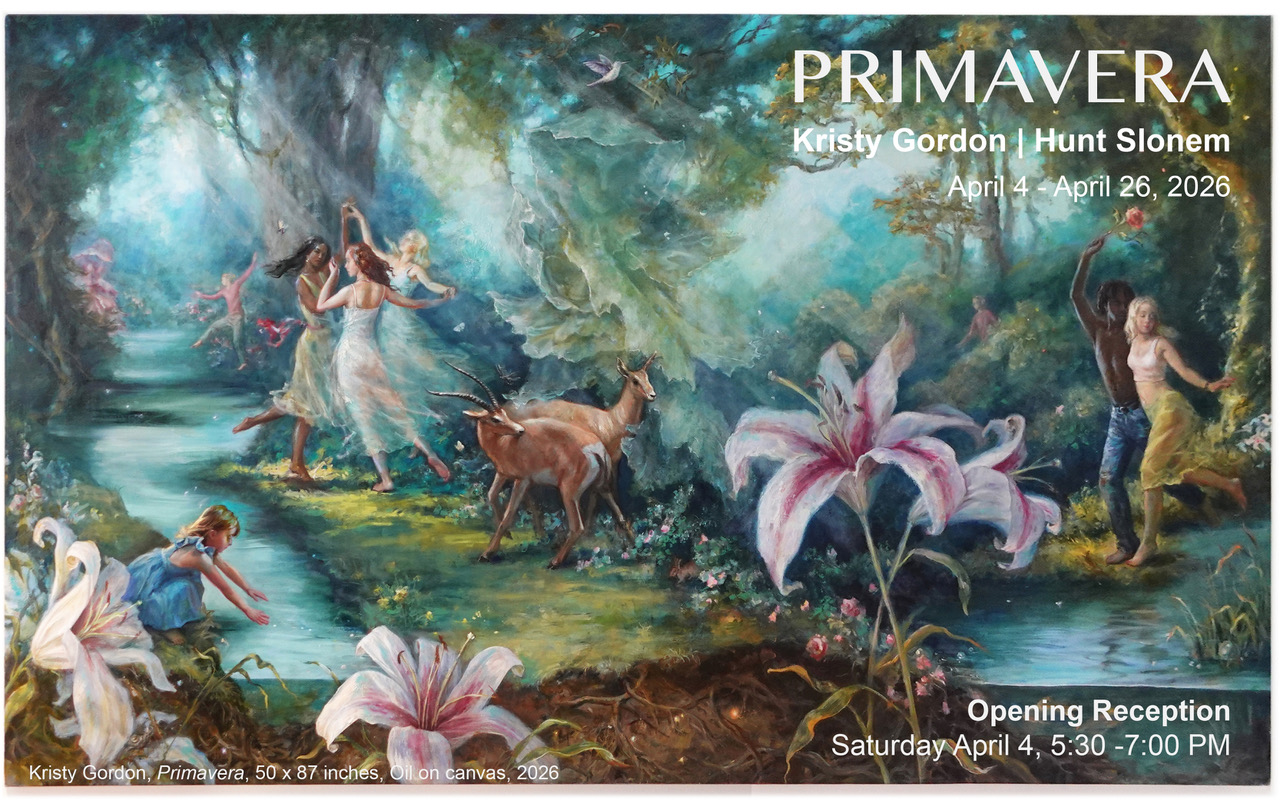
The heart of the exhibition, Primavera (2026), is a monumental canvas that invites the viewer into a world poised between the earthly and the eternal. Like Botticelli's timeless allegory before it, Gordon's Primavera is dense with symbolism and tenderness. Figures move through a verdant forest, draped in light and color that feels both ancient and urgently alive. A child carefully skims the surface of a babbling brook, hovering over the mystery of what lies beneath. A contemporary depiction of the Three Graces dances in a circle, enrobed by rays of sunlight. A pair of deer stand in the center, beneath an ethereal form of Mother Nature, while on the far right, a pair of lovers step into the forest with open arms. Massive pink lilies bloom in the foreground of the composition, reminding the viewer that despite human interference, the purity of nature will always prevail.
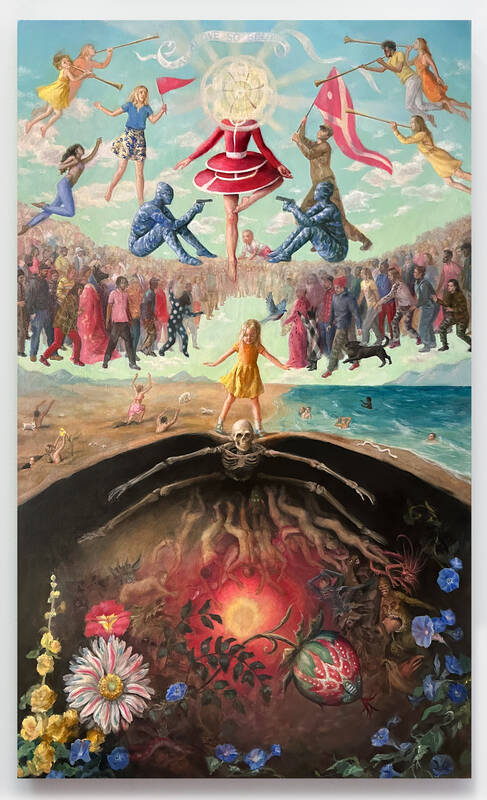
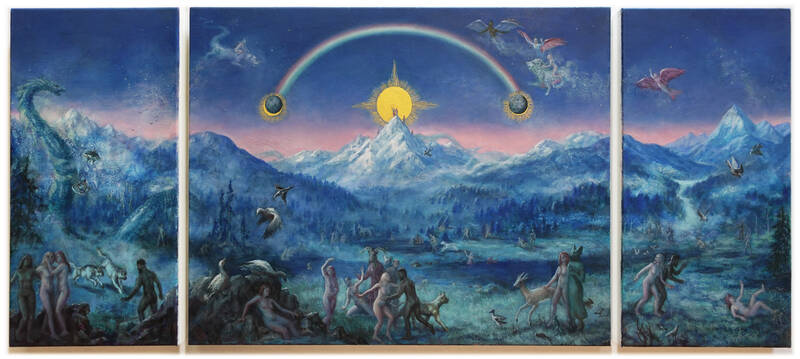
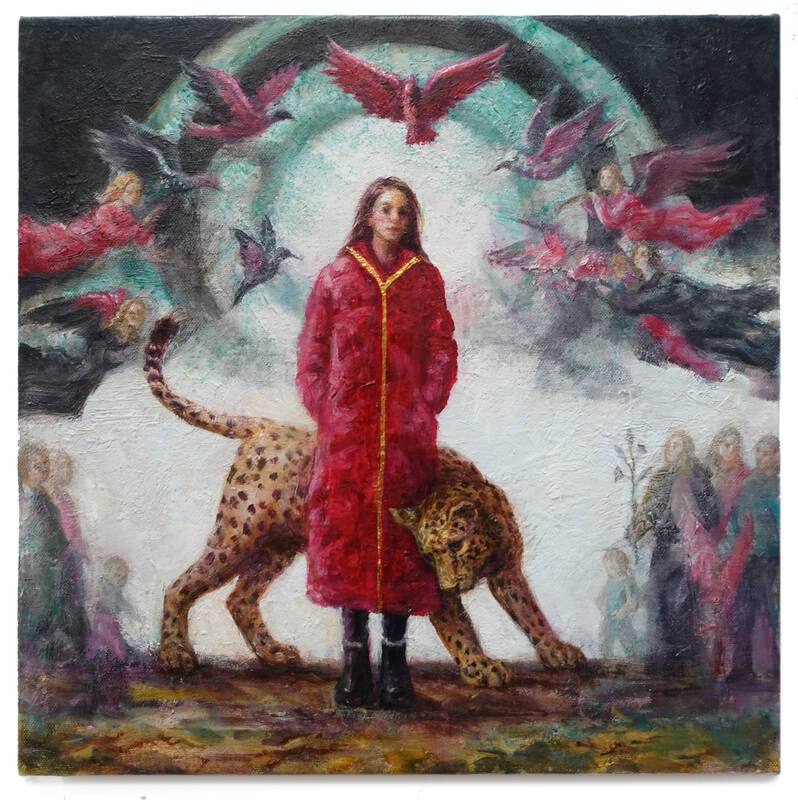
In As Above So Below, Gordon sought inspiration from Jan van Eyck’s The Last Judgement (c.1438), reinterpreting the Flemish masterpiece in contemporary terms. Gordon’s tableau showcases the divide between the realms of the living and the dead. The underworld beneath the earth’s surface - once thought to be hell - now serves as a catalyst for regeneration: a glowing forge where bodies are chewed up by mysterious creatures only to be reincarnated as beautiful flowers.
In van Eyck’s painting, the central figure is Archangel Michael, a revered spiritual warrior who protects heaven from darkness; yet in Gordon’s work, she is merely an unarmed child. Above, is meant to represent Heaven - made explicit in van Eyck’s original, where Christ rises as the foremost figure in the sky’s center. Gordon, however, presents that central figure as a woman pirouetting in place, an orb of light glowing where her head would be. The masses might be expected to appear elated at having reached heaven, yet Gordon’s crowd seems on edge, bracing for what lies ahead. Two camouflage-clad figures aim pistols at each other, pointedly addressing the epidemic of gun violence in contemporary society. Perhaps above is just as chaotic as below.
These mythic and spiritual currents run not only through Gordon’s imagery, but into the very materials she has chosen for this body of work. This year, Gordon has employed ancient pigments derived from earth's natural minerals. Lapis Lazuli, a velvety blue stone, has been used to adorn art and decorative objects as far back as ancient Egypt, and makes frequent appearances in Gordon’s new series of paintings. Revered historically as a gemstone of royalty, truth, and wisdom, it is often associated with the Third Eye chakra, fostering deep enlightenment. Malachite - known as the stone of transformation and a protector from negative energy - yields vibrant green hues. Azurite, known as the stone of heaven, symbolizes deep insight and enhanced intuition, and offers deeper blue tones. Rhodonite, a rose-red mineral, is often called the stone of love or the rescue stone, symbolizes self-love, compassion, and solace from grief.
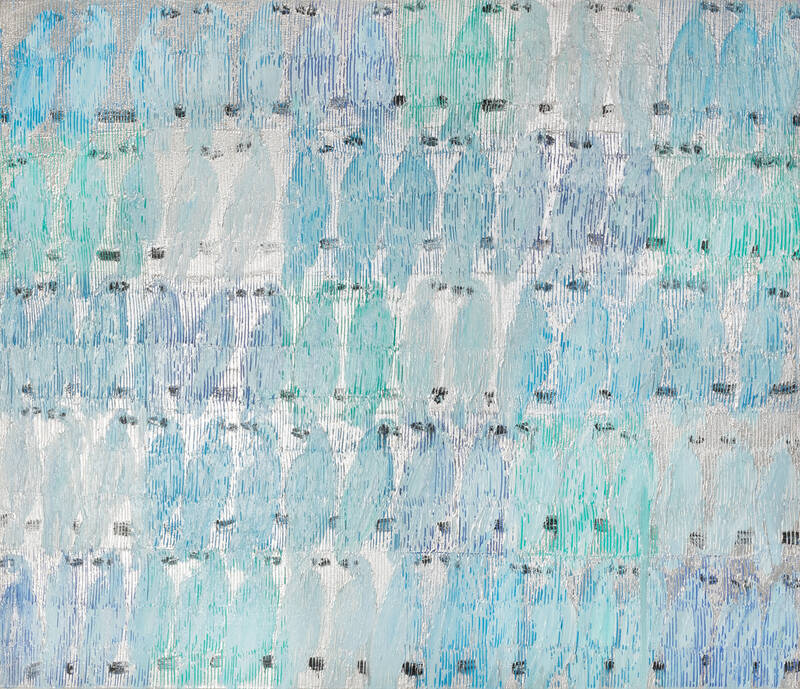
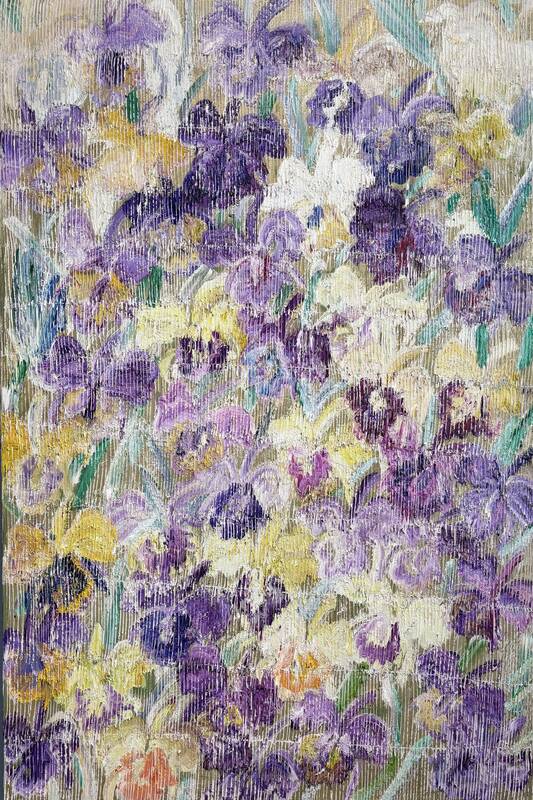
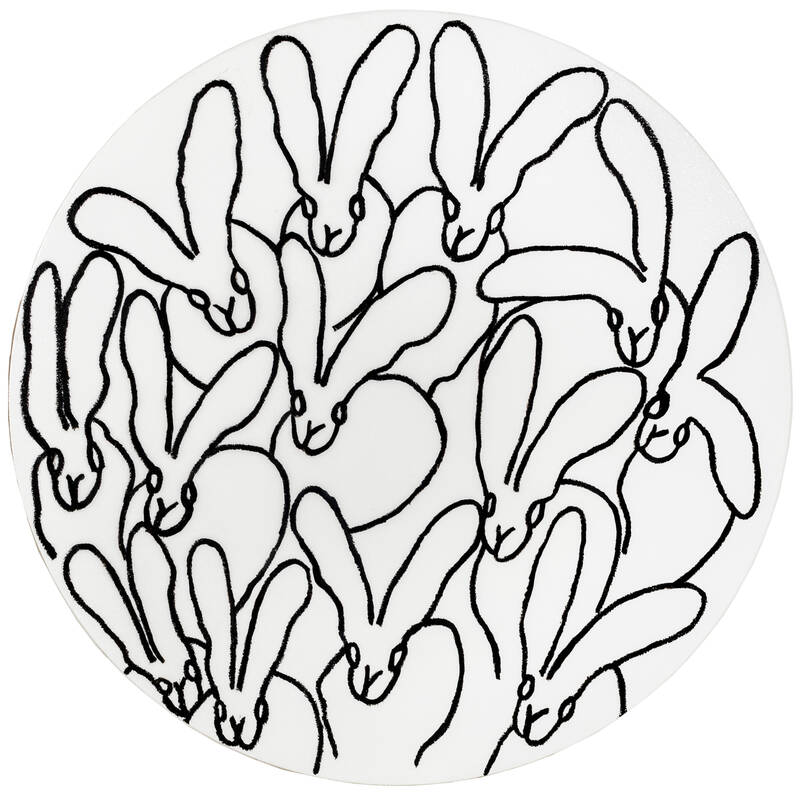
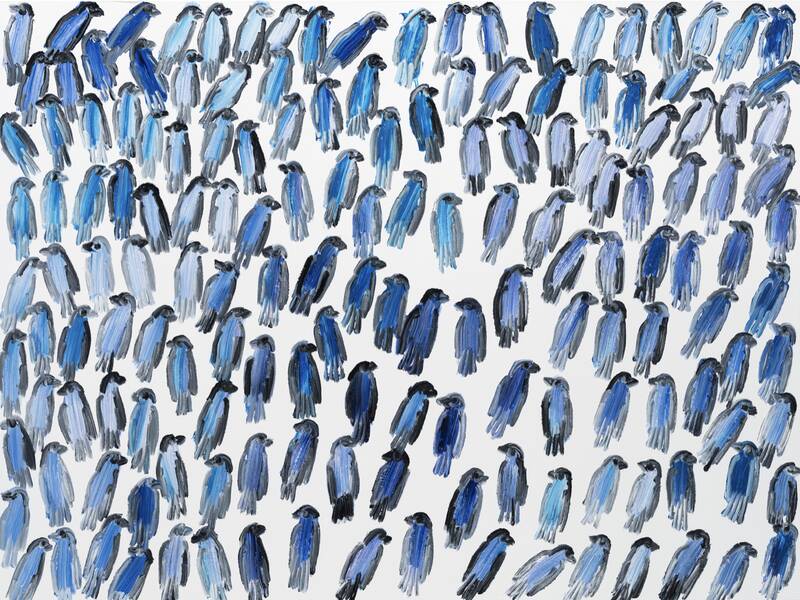
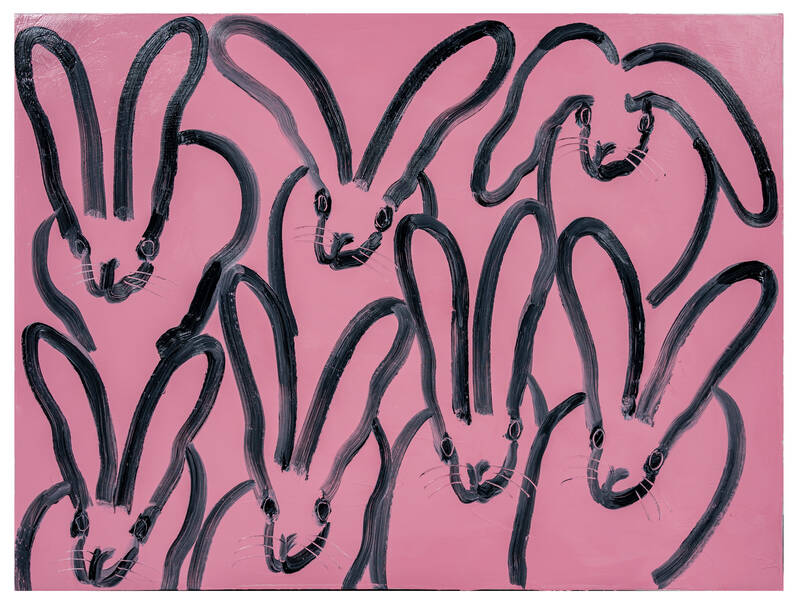
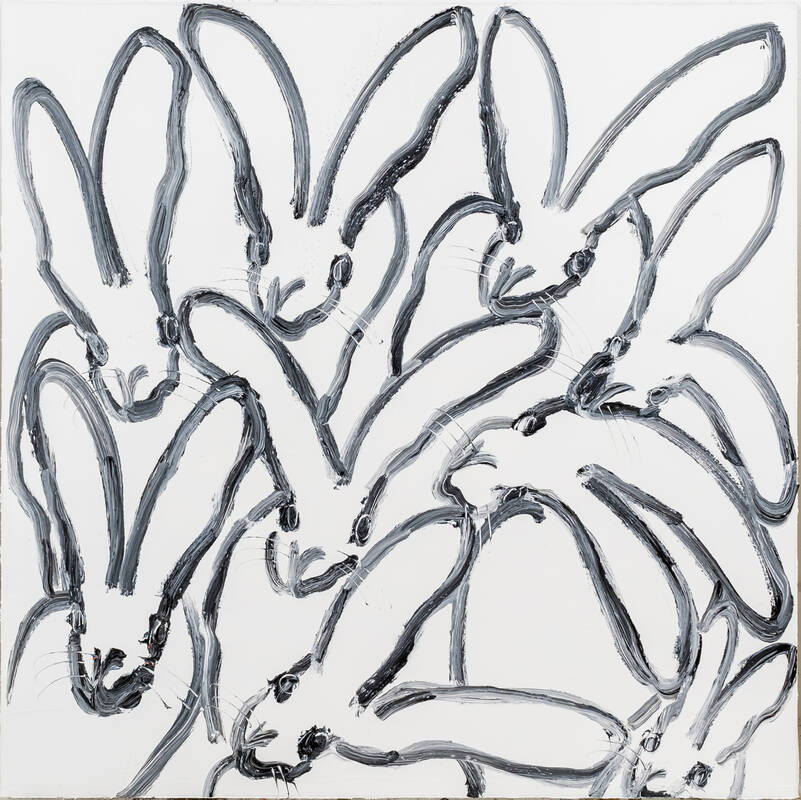
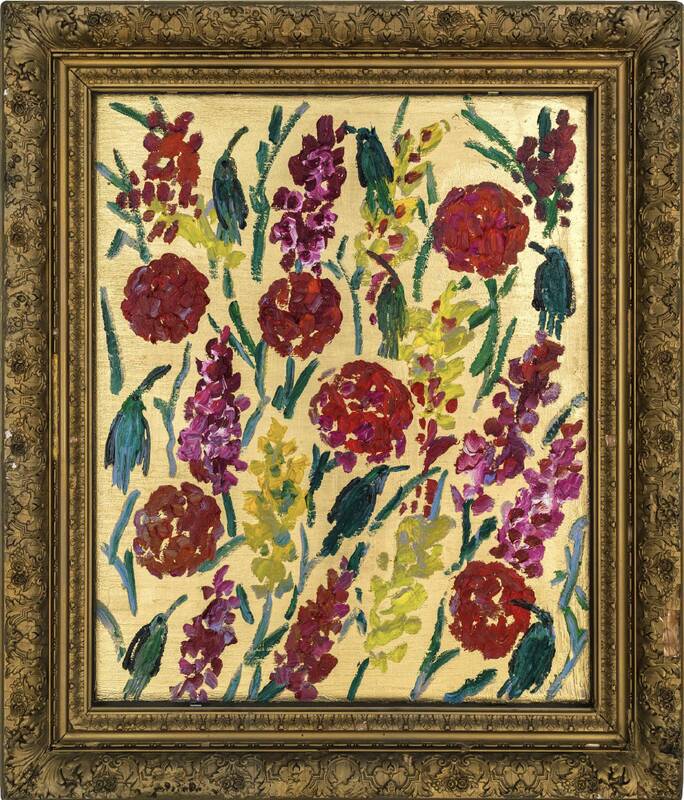
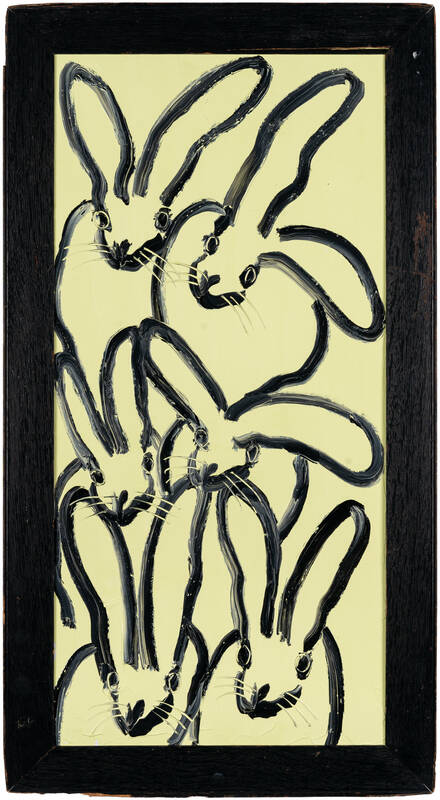
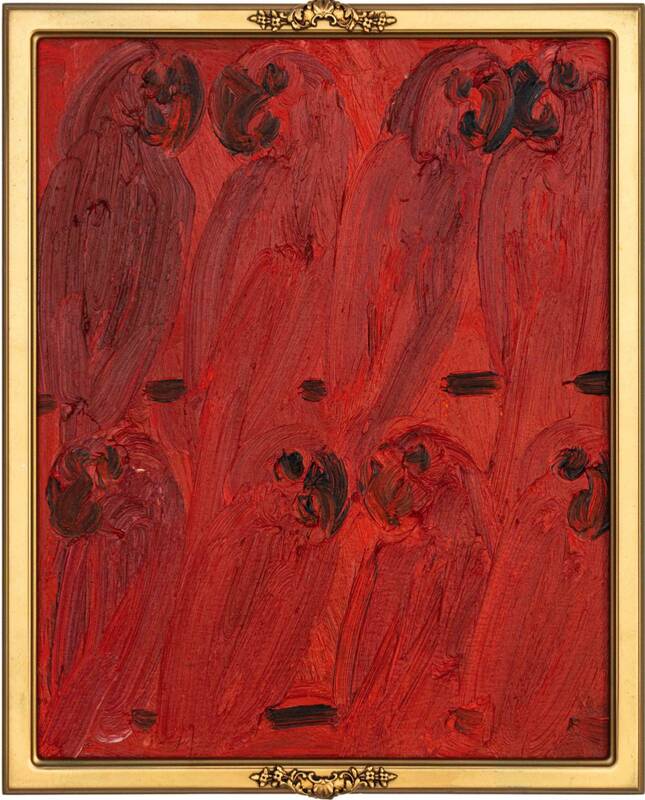
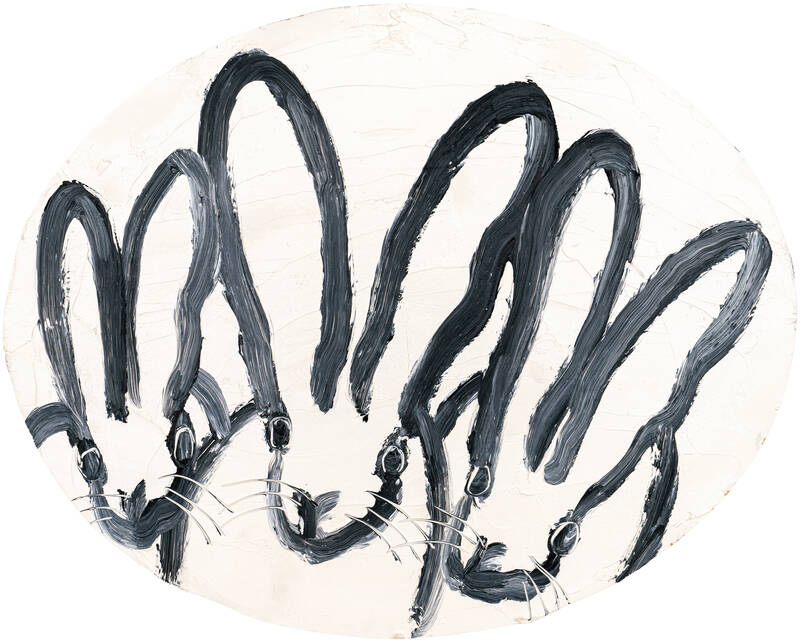
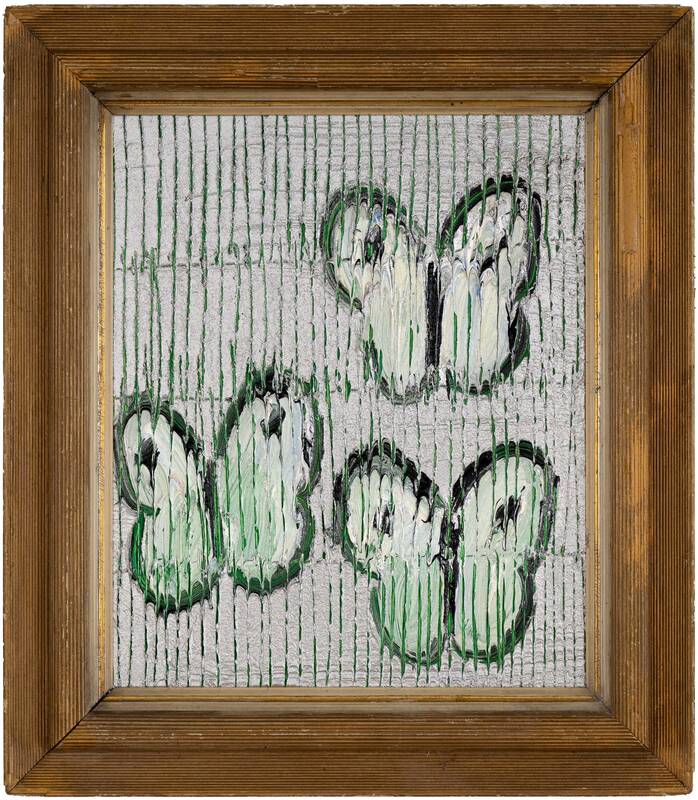
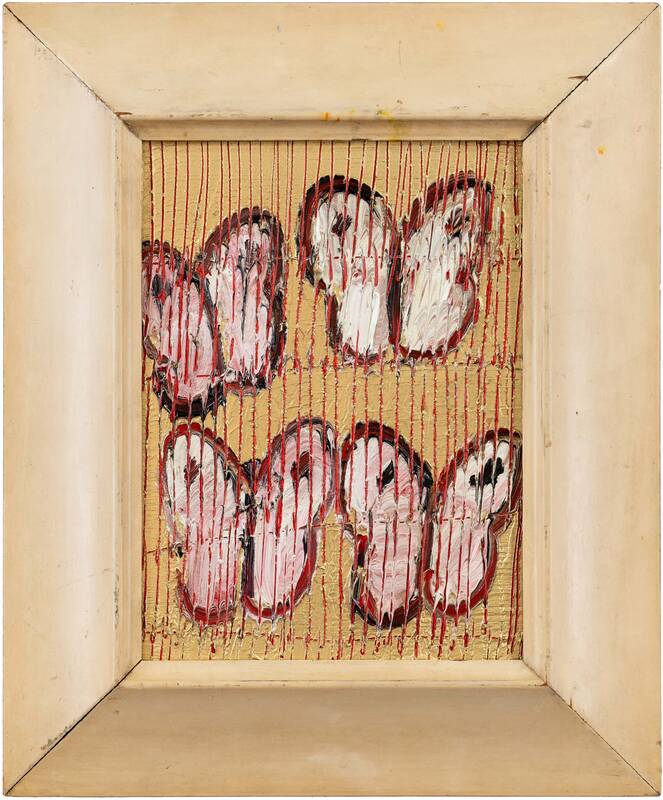
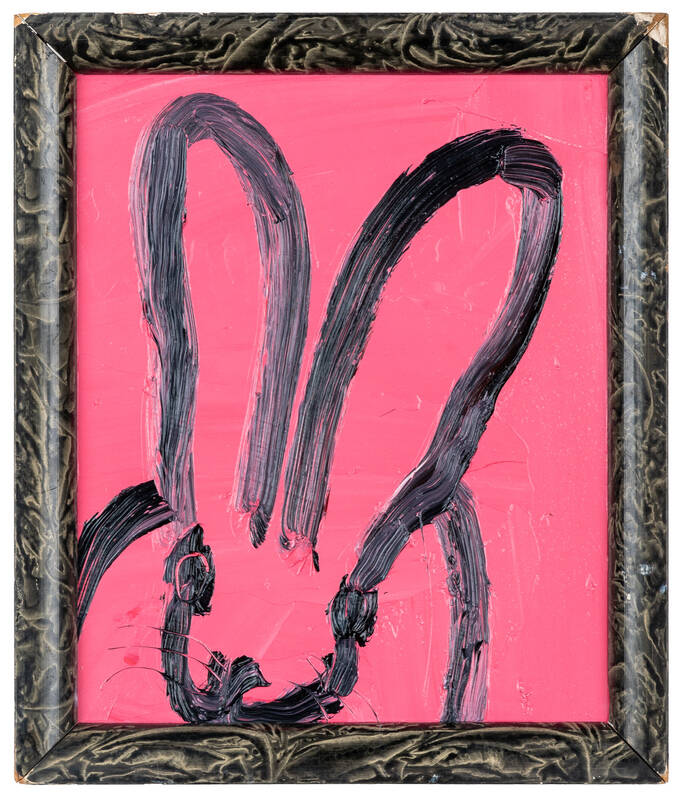
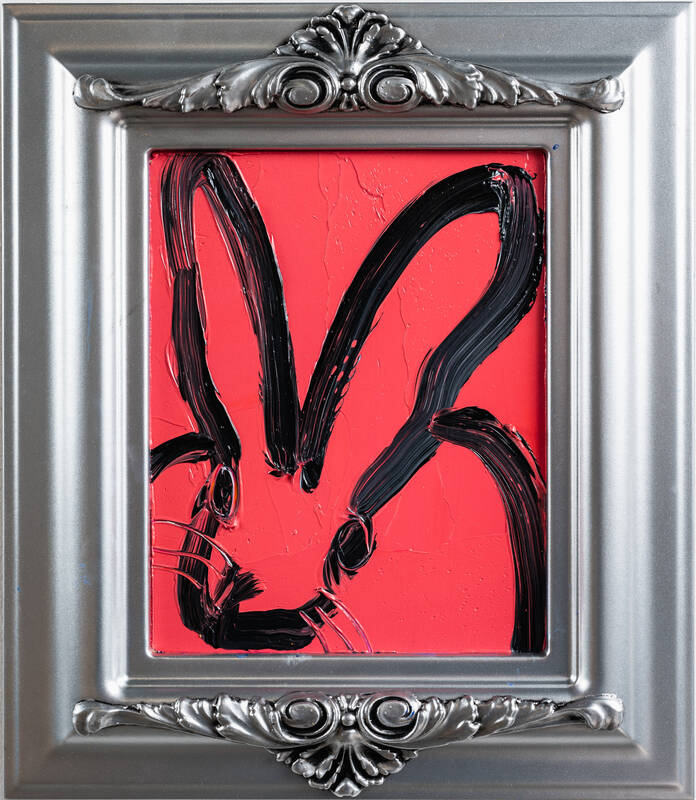
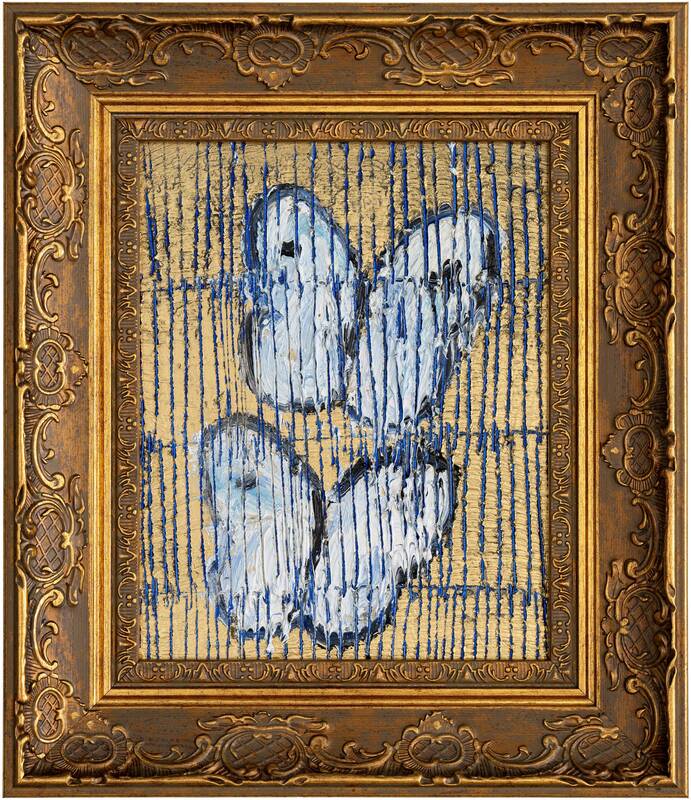
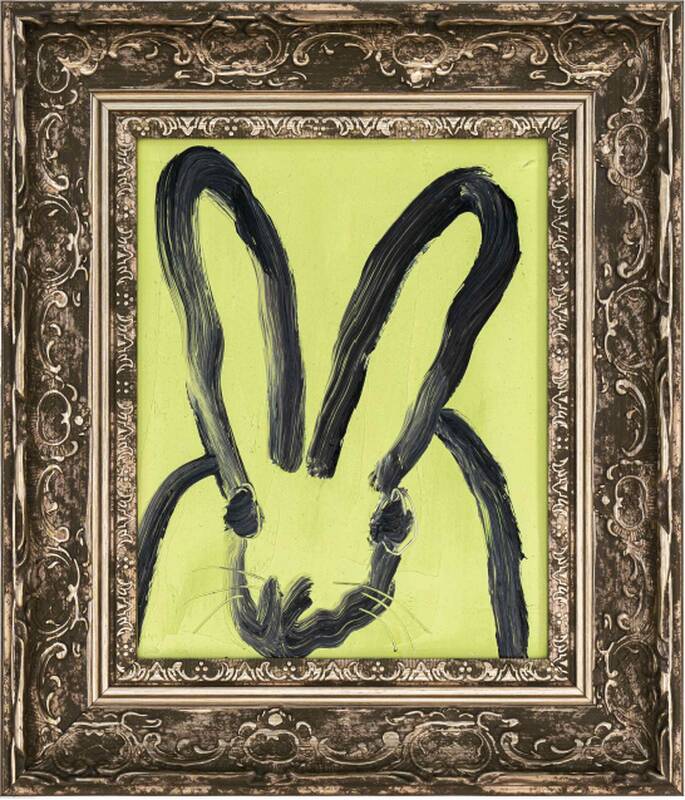
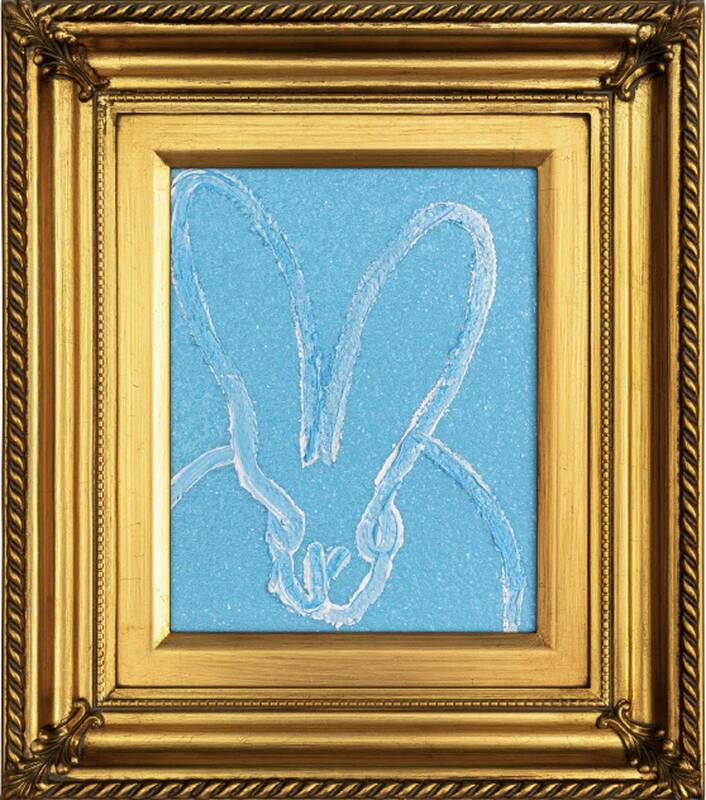
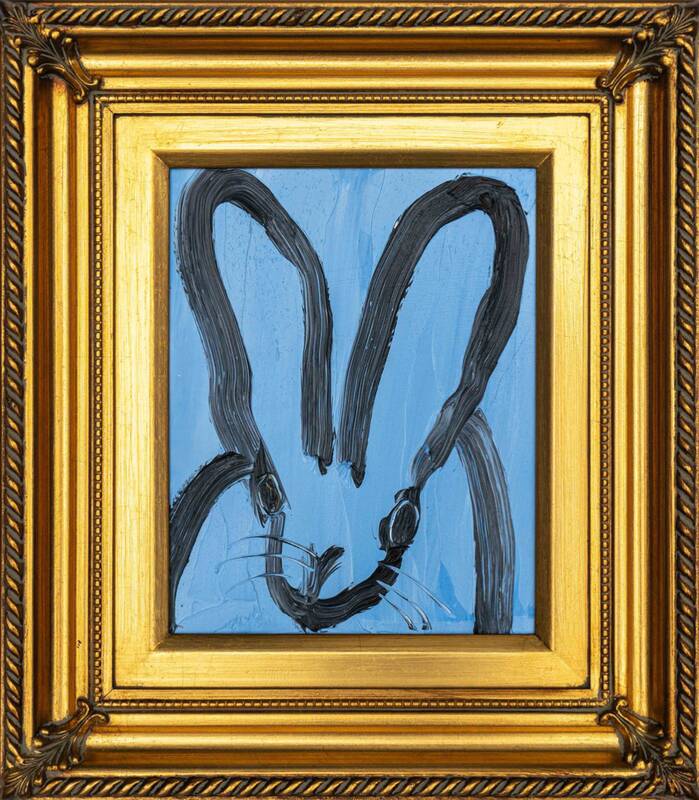
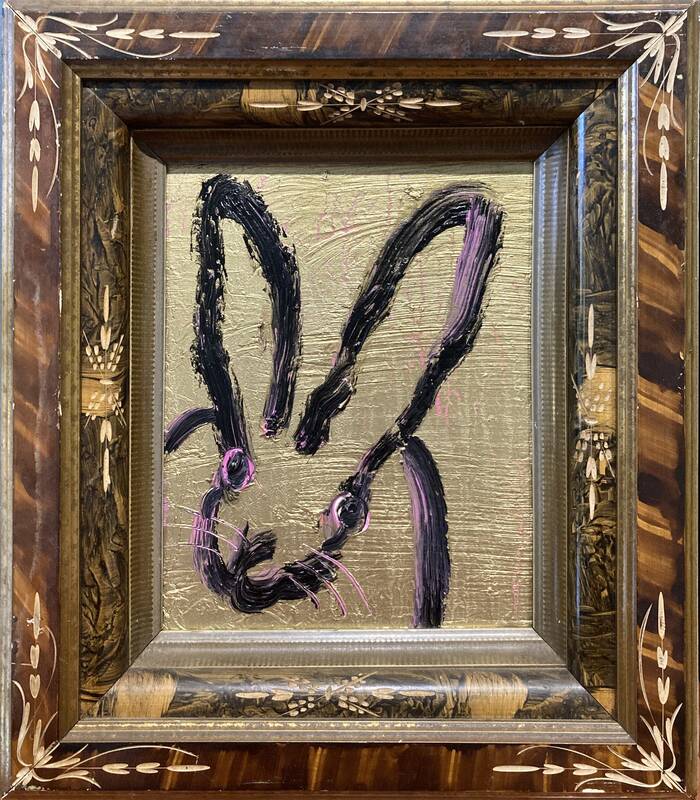
The works of Hunt Slonem (b. 1951, Maine, USA), which accentuate this exhibition, carry a spiritual depth that is easy to underestimate at first glance. Though some viewers are quick to read Slonem as a fashion-forward pop artist, few realize that he meditates and prays for hours before picking up a brush each day — and that while painting, he regards each canvas as a kind of mantra, imbued with its own distinct energy at the moment of its creation. His iconic subjects — bunnies, birds, butterflies, and flowers — are chosen with reverence and intent, not merely rendered as likenesses. Slonem was born in 1951, the Year of the Rabbit in the Chinese Zodiac, and the rabbit has become his most enduring motif: in Christianity, it represents rebirth, fertility, and resurrection; in Buddhism, humility, kindness, and compassion. That the same image can hold such varied meaning speaks to Slonem's all-encompassing spirituality — one that leaves the door open for whatever conclusion the viewer wishes to draw. It is a generosity that has earned him a massive following, an extraordinarily in-demand market, and a global reputation built across more than 250 museum collections worldwide.
In reaching back to ancient images and ancient earth, Gordon finds a language for the present moment — one that is luminous, searching, and very much alive. Slonem, too, is an artist in perpetual communion with something larger than himself, returning day after day to the same sacred subjects, finding in repetition not monotony but deepening meaning. Together, these two artists remind us that the spiritual and the painterly have never truly been separate, and that art, at its most sincere, is always an act of devotion. The Grenning Gallery invites you to experience this extraordinary body of work and to join us in celebrating two artists who are each, in their own way, at the height of their powers.